By Dr. Yogesh Agrawal – Chest physician in waked, Pune
Although Dr Yogesh Agrawal is widely recognized as the best Sleep Apnea Specialist in Pune, many patients also rely on him for expert respiratory evaluation, including symptoms related to Tuberculosis (TB). With dense populations in Pune, PCMC & Wakad. Understanding TB symptoms, early diagnosis, and timely treatment is extremely important for community health.
Tuberculosis remains one of the most persistent infectious diseases in India. The good news is that TB is completely curable when diagnosed early and treated properly.
This blog explains the symptoms, diagnosis, treatment, and prevention of TB.
What is Tuberculosis (TB)?
Tuberculosis is a bacterial infection caused by Mycobacterium tuberculosis.
It mainly affects the lungs but can spread to the spine, lymph nodes, kidneys, intestines, bones, and even the brain.
TB spreads through airborne particles when an infected person coughs, sneezes, or talks.
It does not spread through physical touch, handshakes, food sharing, or utensils.
Types of Tuberculosis
1. Latent TB Infection (LTBI)
- Bacteria remain inactive inside the body
- No symptoms
- Not contagious
- Can become active later if immunity weakens
2. Active TB Disease
- Bacteria multiply and cause symptoms
- Highly contagious
- Needs immediate medical treatment
Symptoms of Tuberculosis
TB symptoms vary depending on whether it affects the lungs or other organs.
Pulmonary TB Symptoms (Lungs)
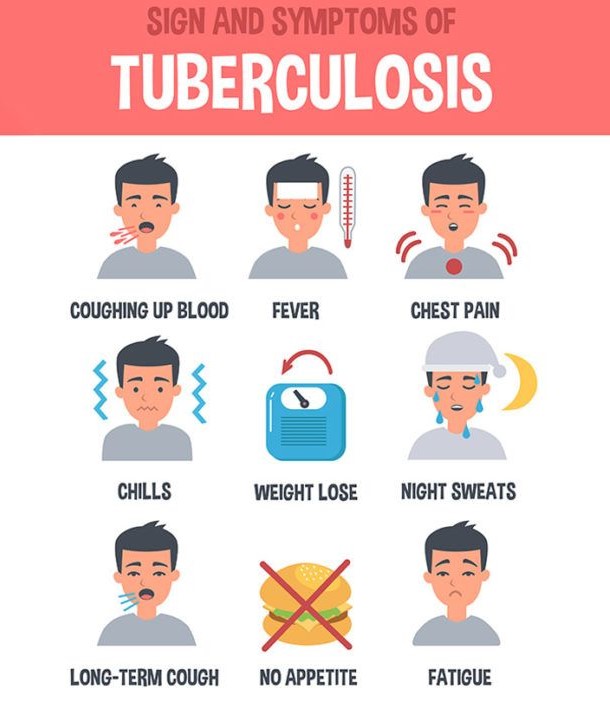
- Cough lasting for 2–3 weeks or more
Persistent cough is the most common early sign. - Coughing up blood (Hemoptysis)
Suggests advanced infection. - Chest pain and difficulty breathing
Discomfort increases with deep breathing or coughing. - Fever and night sweats
Usually mild fever, more noticeable in the evenings. - Rapid weight loss and loss of appetite
TB commonly causes unintended weight loss. - Extreme fatigue
Due to reduced oxygen exchange.
Extrapulmonary TB Symptoms
When TB affects organs other than the lungs:
- Lymph Node TB: Swelling in the neck or armpit
- Spinal TB: Backache, stiffness
- Kidney TB: Blood in urine
- Bone TB: Painful joint swelling
- Brain TB (TB Meningitis): Headache, vomiting, confusion
- Intestinal TB: Abdominal pain, diarrhea
Early detection prevents severe and life-threatening complications.
How TB Is Diagnosed
Accurate and timely diagnosis is crucial. Early screening in Pune and PCMC helps prevent community spread.
1. Clinical Examination
The doctor checks:
- Symptoms
- Breathing pattern
- Medical history
- Possible exposure
2. Chest X-ray
Used to identify lung lesions, cavities, nodules, or fluid accumulation.
3. Sputum Tests (Most Crucial)
- AFB Smear Microscopy
Detects TB bacteria under a microscope. - CBNAAT / GeneXpert Test
Detects TB DNA
Identifies rifampicin resistance
Widely used in Pune and PCMC for rapid confirmation.
4. Mantoux Test (Skin Test)
A small amount of tuberculin is injected under the skin.
Swelling indicates TB exposure.
5. Blood Tests
- IGRA (Interferon-Gamma Release Assay)
- CBC and ESR
Helpful for detecting latent TB.
6. CT Scan Chest
Provides detailed images of lung damage.
7. Biopsy
Used for extrapulmonary TB in organs like lymph nodes, spine, or brain.
Treatment Options for Tuberculosis
TB is fully curable if the patient follows the complete treatment course. Typical treatment lasts 6 to 9 months.
1. First-Line TB Treatment: DOTS Therapy
DOTS (Directly Observed Treatment, Short-Course) is the global standard.
Medicines used:
- Isoniazid (INH)
- Rifampicin (RIF)
- Ethambutol (EMB)
- Pyrazinamide (PZA)
Treatment Phases:
- Intensive Phase: 2 months
- Continuation Phase: 4–7 months
Finishing the full course is essential.
2. MDR-TB Treatment (Multidrug-Resistant TB)
This occurs when TB bacteria resist INH and Rifampicin.
Treatment lasts 18–24 months using:
- Fluoroquinolones
- Second-line injectables
- Newer drugs like Bedaquiline or Delamanid
3. XDR-TB (Extensively Drug-Resistant TB)
A severe type requiring advanced therapy and expert monitoring.
4. Treatment for Latent TB
To prevent progression to active TB:
- Isoniazid for 6–9 months
- Rifampicin for 4 months
- INH and Rifapentine weekly
5. Supportive Care
- High-protein diet
- Adequate hydration
- Regular follow-up
- Managing side effects
Prevention of Tuberculosis
- BCG vaccination for children
- Avoid close contact with TB patients
- Maintain ventilation in rooms
- Use masks and follow hygiene practices
- Early screening for those with persistent cough
- Strong immunity through healthy lifestyle
Why Choose Dr Yogesh Agrawal for TB Guidance in wakad and PCMC?
Services Available
- Snoring Treatment
- Sleep Apnea Treatment
- Polysomnography (Sleep Study)
- Home Sleep Test
- CPAP and BiPAP Therapy
- Respiratory Evaluation
- TB Symptom Assessment and Referral
Products Offered
- CPAP Machines
- BiPAP Machines
- Masks and Tubing
- Anti-Snoring Devices
- Oral Appliance Therapy
Dr. Agrawal ensures patients receive accurate assessment and continued respiratory support.
Conclusion
Tuberculosis is serious but fully curable. Early detection, proper treatment, and preventive steps protect both the patient and the community. If you have a persistent cough, fever, weight loss, chest discomfort, or breathlessness, seek medical evaluation immediately.
For advanced respiratory evaluation, snoring treatment, and sleep disorder management, visit:
Dr Yogesh Agrawal – Chest physician in waked, Pune
Location: NEAR, 108, KHIVANSARA TRADE CENTRE (KTC), WAKAD PHATA, Dange Chowk Rd, above GANESH BHEL, Pune, Maharashtra 411033.
Website: https://chestphysicianpune.com/
Recent Posts
-
 Understanding Tuberculosis: Symptoms, Diagnosis, and Treatment Options
 -
 Diabetes and Its Emergencies: Symptoms, Risks & Quick Action
 -
 Sepsis Management: Critical Care Strategies that Save Lives
 -
 Understanding ICU Alarms: What Families Should Know
 -
 Why Follow-up OPD Consultations Are Essential Following an ICU Stay