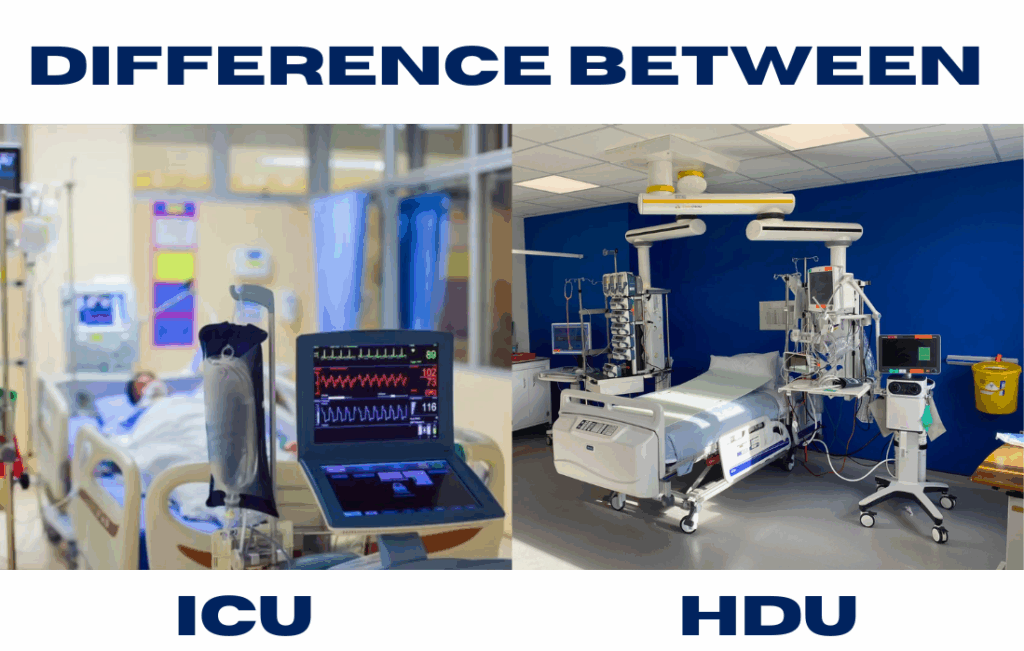
When a loved one is hospitalized with a serious illness or injury, understanding the medical terms and the levels of care available can be overwhelming. Among the most common yet confusing terms are ICU (Intensive Care Unit) and HDU (High Dependency Unit). While both are meant for patients who require close monitoring and support, they differ in the level of care provided, staff-to-patient ratio, and the severity of illness they cater to.
In this blog, we break down the key differences between ICU and HDU, and help you understand what each unit means for the treatment and recovery of your loved one.
What is an ICU (Intensive Care Unit)?
The ICU is a specialized area in a hospital designed to care for critically ill patients who require constant, round-the-clock monitoring and life-supporting treatments. Patients admitted to the ICU are often suffering from life-threatening conditions such as:
- Severe trauma or accidents
- Major surgeries like heart or brain surgery
- Respiratory failure needing mechanical ventilation
- Septic shock, cardiac arrest, or multi-organ failure
In the ICU, care is provided by a multidisciplinary team that includes critical care specialists (intensivists), anesthesiologists, trained ICU nurses, respiratory therapists, and other support staff. The patient-to-nurse ratio is low (usually 1:1 or 1:2), ensuring constant observation.
ICU patients are often connected to advanced machines like:
- Ventilators for breathing support
- Monitors for heart rate, blood pressure, oxygen, etc.
- Infusion pumps for accurate drug and fluid delivery
- Dialysis machines in case of kidney failure
What is an HDU (High Dependency Unit)?
The HDU, also known as a step-down or intermediate care unit, is for patients who are seriously ill but not critically unstable. These patients need more attention than what’s provided in a general ward but less than that required in an ICU.
Examples of patients suitable for HDU include:
- Post-operative patients who are recovering from major surgery
- Patients who were recently discharged from ICU and are improving
- Patients needing close monitoring for conditions like severe infections, heart failure, or breathing issues
HDU facilities also have trained staff and monitoring equipment, though not as intensive or advanced as the ICU. The nurse-to-patient ratio is higher (usually 1:3 or 1:4), but still ensures regular monitoring.
Key Differences Between ICU and HDU
| Feature | ICU | HDU |
| Level of Care | Highest (for critically ill patients) | Intermediate (for stable but serious cases) |
| Monitoring | Continuous, advanced life support systems | Regular, non-invasive monitoring |
| Staffing | Intensivists, ICU nurses, respiratory therapists | Trained nurses, on-call specialists |
| Patient-to-Nurse Ratio | 1:1 or 1:2 | 1:3 or 1:4 |
| Common Equipment | Ventilators, dialysis machines, invasive monitors | Non-invasive monitors, oxygen support |
| Patient Type | Unstable, life-threatening illness | Recovering, stable but monitored patients |
Why the Distinction Matters for Families
For families, understanding whether a patient is in the ICU or HDU helps in:
- Setting expectations: ICU stays often indicate a more serious or unstable condition, while HDU suggests a step towards recovery.
- Emotional preparedness: Knowing the level of care required can help families emotionally and mentally prepare for the patient’s journey.
- Communication with doctors: It allows families to ask the right questions about treatment plans, expected recovery, and next steps.
- Financial planning: ICU care is more resource-intensive and often more expensive. HDU may offer a cost-effective alternative without compromising patient safety during recovery.
Transitioning Between Units
A patient may move from ICU to HDU once they stabilize and no longer need intensive life support. This transition is a positive sign of recovery. Conversely, a patient in HDU may be shifted to ICU if their condition worsens.
This movement is carefully assessed and managed by the critical care team to ensure the right level of care at each stage of the patient’s illness.
Summary
Both ICU and HDU play essential roles in managing serious health conditions, but they cater to different levels of patient needs. ICU is for critically ill patients requiring round-the-clock monitoring and life support, while HDU provides a bridge between intensive care and general ward — ideal for patients on the path to recovery or those who need close, but not intensive, monitoring.
For patients requiring specialized, safe, and compassionate care in either ICU or HDU settings, Dr. Amit Kumar Choudhary, MD in Anesthesia and DrNB in Critical Care Medicine, Pune, brings deep clinical expertise and a commitment to patient-centered treatment, ensuring that every patient receives the most appropriate level of care based on their condition.
Recent Posts
-
 Understanding Tuberculosis: Symptoms, Diagnosis, and Treatment Options
 -
 Diabetes and Its Emergencies: Symptoms, Risks & Quick Action
 -
 Sepsis Management: Critical Care Strategies that Save Lives
 -
 Understanding ICU Alarms: What Families Should Know
 -
 Why Follow-up OPD Consultations Are Essential Following an ICU Stay